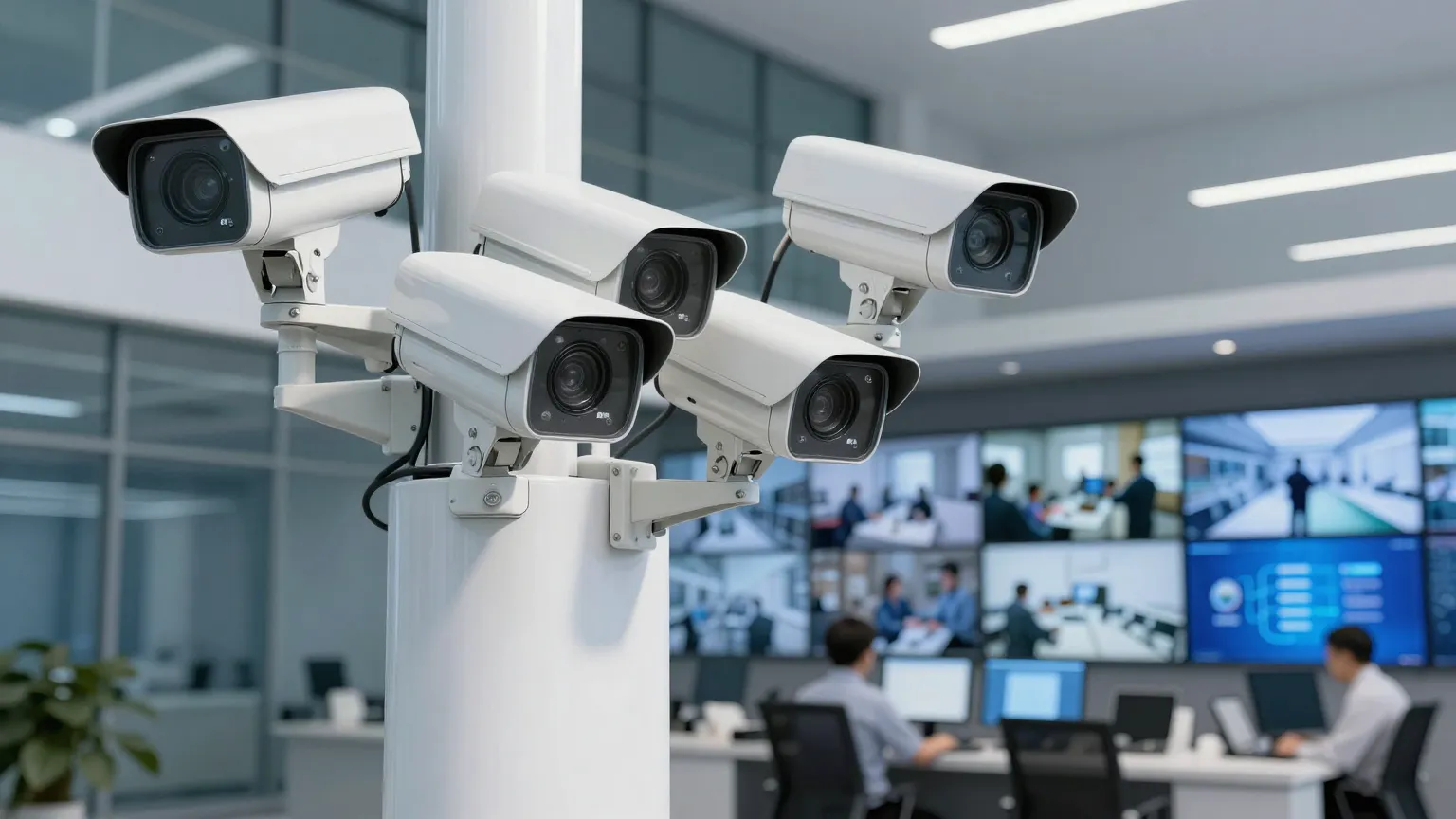
The fundamental problem with traditional CCTV is that it's reactive. Cameras record footage that's reviewed after an incident occurs. By the time security personnel identify the threat, the damage is done. AI-powered surveillance changes this equation entirely — it detects, classifies, and alerts on threats in real time.
Edge AI analytics is the enabling technology. Instead of streaming raw video to a central server for processing, modern IP cameras run neural network models directly on the camera chipset. This means video analysis happens at the source with sub-second latency, and only metadata and alert triggers are transmitted over the network.
The most impactful AI features for commercial and industrial facilities include Line Crossing Detection (alerts when a person or vehicle crosses a defined virtual boundary), Loitering Detection (flags individuals who remain in a restricted zone beyond a threshold time), and Object Removal Detection (detects when equipment or assets are moved from designated positions).
Thermal imaging cameras add another layer of intelligence. Operating in the 8–14 micron wavelength range, thermal cameras detect heat signatures regardless of ambient lighting. This makes them ideal for perimeter security in pitch-dark environments, fog, and rain — conditions where standard optical cameras are effectively blind.
Automatic Number Plate Recognition (ANPR) integrates with access control systems to create a seamless vehicle management layer. Authorized vehicles are identified and granted entry automatically, while unauthorized plates trigger alerts. The system maintains a searchable database of every vehicle entry and exit with timestamp accuracy.
Command center design is equally critical. UDS Infrastructure designs video wall installations with NVR redundancy — if one recorder fails, the system fails over automatically without losing a single frame. Operators can manage hundreds of cameras from a single interface with intelligent grouping, priority-based alert queuing, and one-click incident response workflows.
The ROI on AI-powered surveillance is strongest when it replaces or augments human guard patrols. A single AI camera system covering a perimeter fence can detect intrusions more reliably than a team of guards, 24/7, without fatigue or distraction — at a fraction of the long-term cost.