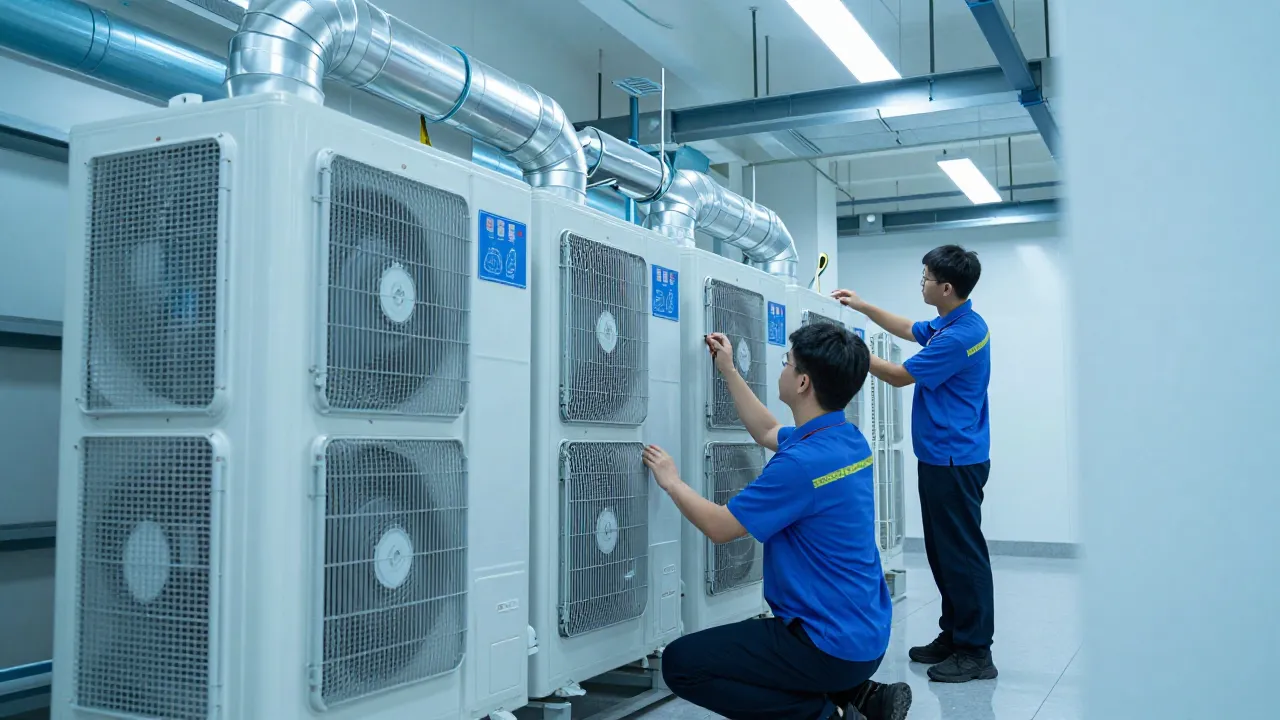
HVAC systems account for 40–60% of total energy consumption in commercial buildings across India. Yet the majority of facility managers operate on a break-fix model — they only call a technician when something fails. This reactive approach is the single biggest driver of energy waste in commercial properties.
The math is straightforward. A chiller running with fouled condenser tubes consumes 15–20% more energy to deliver the same cooling output. A clogged AHU filter increases fan energy by 10–15% while simultaneously degrading indoor air quality. Refrigerant leaks reduce system efficiency progressively until the unit trips on low-pressure safety cutoffs.
A well-structured Annual Maintenance Contract (AMC) addresses all of these issues through scheduled preventive interventions. Quarterly deep-cleaning of condenser and evaporator coils restores heat exchange efficiency. Monthly filter replacements maintain airflow. Semi-annual refrigerant checks and top-ups keep the thermodynamic cycle operating at design conditions.
Beyond component-level maintenance, a good AMC program includes system-level optimization. This means verifying that chilled water delta-T across the coil matches design values, that supply air temperatures are correct for the current load, and that variable frequency drives (VFDs) are modulating properly to match demand.
The financial impact is measurable. UDS Infrastructure's HVAC AMC clients typically see a 25–30% reduction in energy bills within the first quarter of the contract. The AMC cost is a fraction of the energy savings, making it one of the highest-ROI investments a facility manager can make.
For buildings with BMS integration, the AMC program becomes even more powerful. Real-time monitoring of compressor currents, refrigerant pressures, and zone temperatures allows our technicians to identify developing issues weeks before they cause a failure — turning unplanned breakdowns into scheduled maintenance windows.