Fire safety in Indian commercial construction is governed by the National Building Code (NBC 2016) and enforced by State Fire Services departments. Non-compliance doesn't just risk lives — it can halt occupancy certificates, delay project handovers, and expose developers to criminal liability under the Disaster Management Act.
Standard #1: Automatic Sprinkler Systems. NBC mandates automatic sprinkler coverage for all commercial buildings above 15 meters in height. The system must be hydraulically designed to deliver a minimum discharge density based on the building's hazard classification. Wet-type systems are standard for climate-controlled buildings, while dry-pipe or pre-action systems are used in unheated areas.
Standard #2: Fire Hydrant and Wet Riser Systems. Every building above 15 meters requires an internal wet riser system with landing valves on each floor. External hydrant points must be positioned within 45 meters of the farthest point of the building. The fire pump room must maintain adequate pressure even during peak water demand.
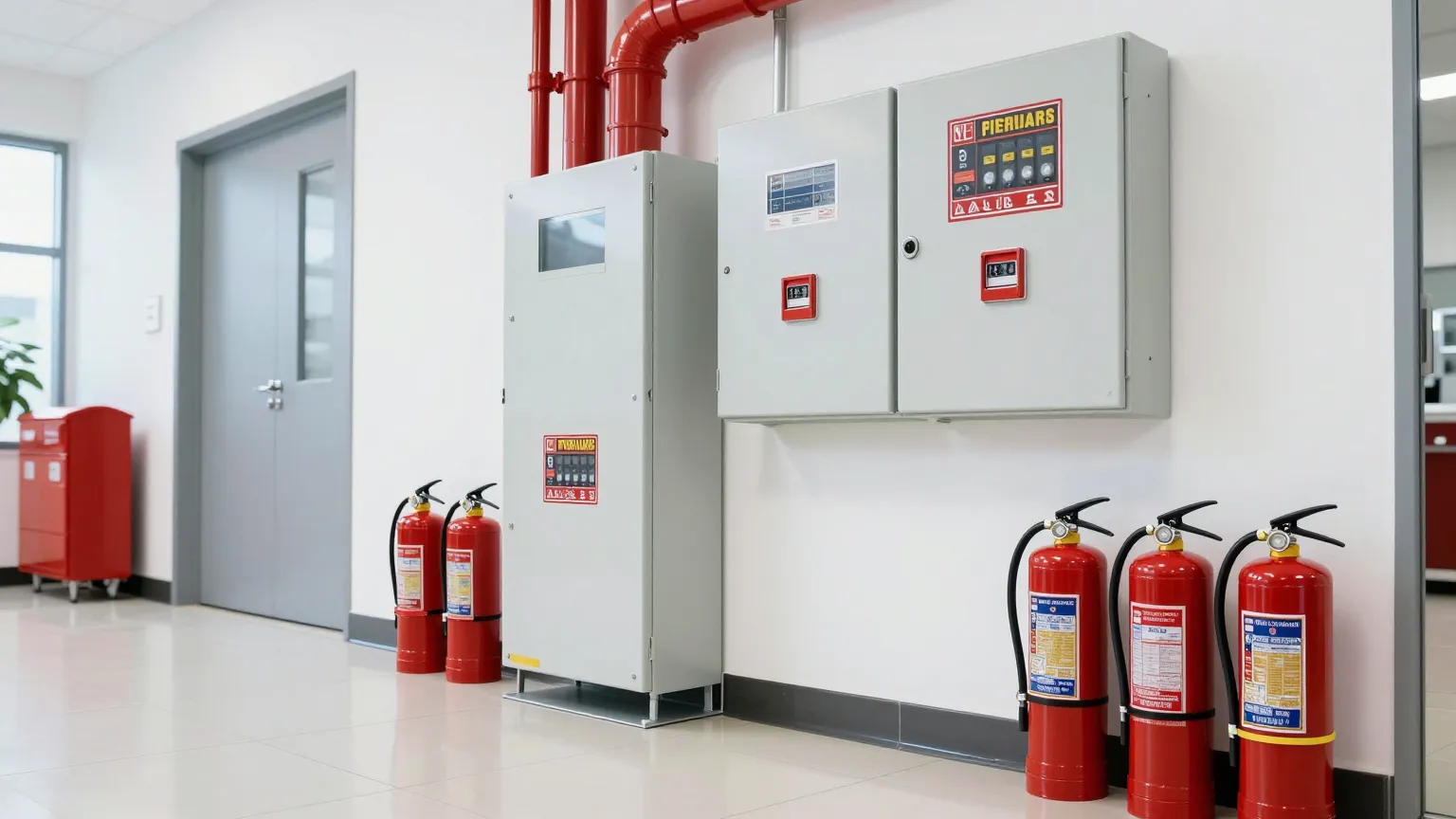
Standard #3: Addressable Fire Alarm Systems (FAS). Modern buildings require addressable detection systems — not the old conventional zone-based panels. Addressable systems identify the exact device that triggered an alarm, enabling faster response. Smoke detectors, heat detectors, and manual call points must be placed per NBC spacing requirements.
Standard #4: Means of Escape. NBC prescribes detailed requirements for escape routes including minimum corridor widths (1.5m), staircase widths (based on occupant load), and maximum travel distances to exits. Pressurized staircases are required for buildings above 24 meters to prevent smoke infiltration during evacuation.
Standard #5: Passive Fire Protection. Fire-rated walls, floors, and doors form the passive backbone of any fire strategy. NBC requires 2-hour fire-rated compartmentation for most commercial occupancies. Fire stops at every floor penetration (cable trays, pipe risers, duct openings) are mandatory to prevent vertical fire spread.
At UDS Infrastructure, our fire protection engineering team designs compliant hydraulic networks from first principles, ensuring your building meets NBC standards at the design stage — not as a costly retrofit after construction.